A Traditional Maasai Goat Roast
By Naserian Ferguson.

Having the privilege to witness a Maasai goat roast was one of the most special —and fascinating– cultural experiences that I have taken part in during our time in Kenya. The two families who invited us were incredibly hospitable and wanted us to be actively involved in learning more about their culture, which made it such a memorable experience.
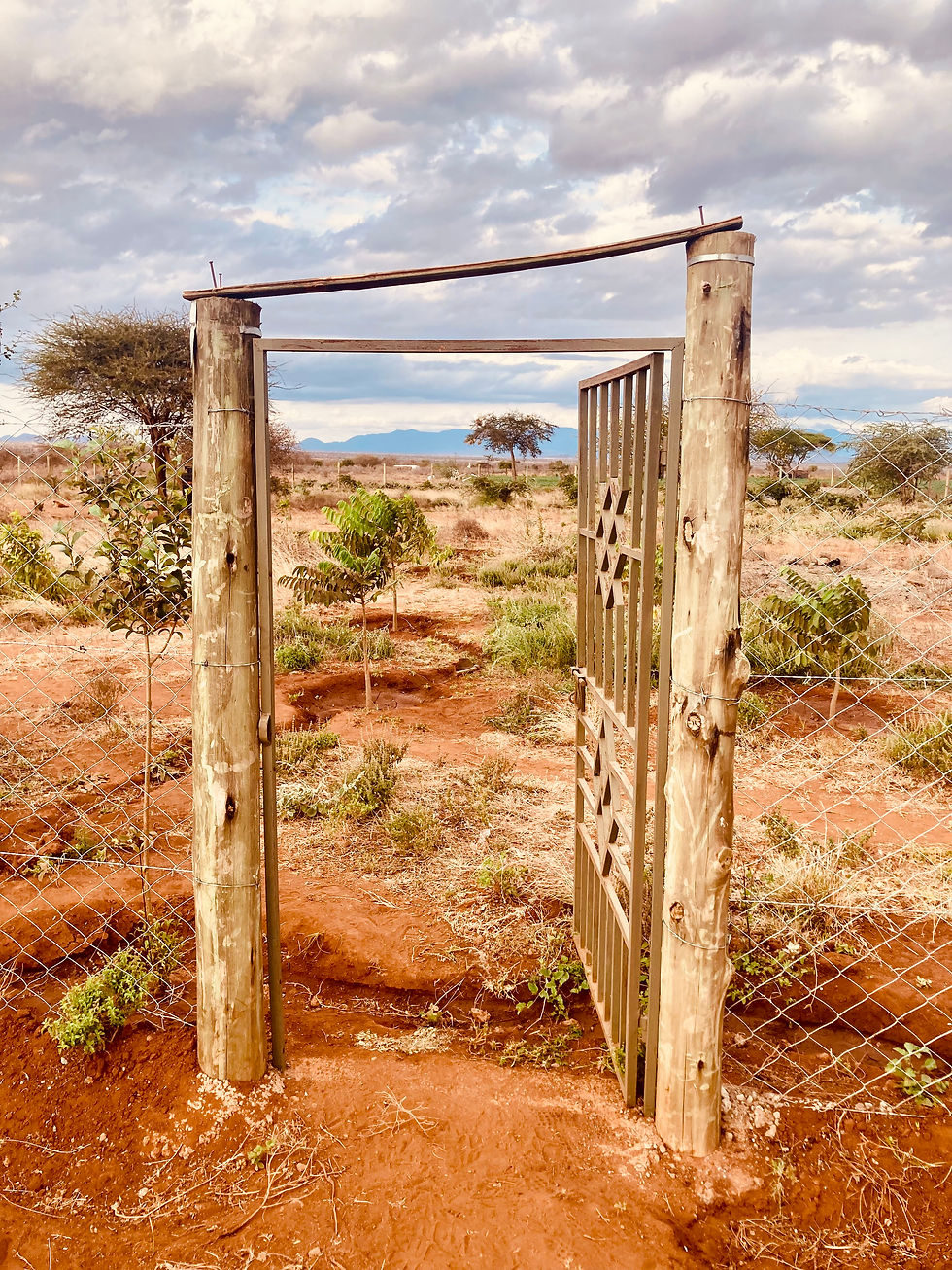
We arrived in the late afternoon, just enough time to butcher the goat before we ate it around the fire. The goat — our dinner — was tied to a small tree outside the thatched roof gazebo where we took sweet, milky tea. A couple Maasai morans dressed in red and black checkered shukas untied it and led it away to a small, encircled area bordered by an acacia thorn fence. Inside the circle laid a mat of dried tan, spiky leaves, on top of which was a heaped pile of greenery. This was where the goat would be butchered, primarily for cleanliness reasons. The dried and fresh leaves offered a layer of protection from the ground. One of the families also used piles of wild basil bushes, which served an aromatic purpose as well as a hygienic one. Each wild basil stem had looping ringlets of muted green bulbs and petals. If you crushed or rolled them in your palms, the scent would escape, and travel in delicious haste to your awaiting nostrils.
They killed the goat on top of the brush with a Maasai knife, then invited us over to help butcher it. Even though I and several others were women — who in Maasai culture eat separately and do not assist or even watch the butchering process — they graciously allowed us to experience it as well as the men. I was nervous at first about the cultural appropriateness of watching as a female, but they did not seem to hesitate in including us.

They even showed us how to skin it, and let me have a try at it. Using the Maasai knives, they skinned the white, hairy coat off. As they went through the rest of the process, we got a natural anatomy lesson. One of the morans, as he went through the various organs, would point them out to us. Ones such as the stomach, intestines, liver, pancreas, and others, were noted. “This is the womb,” the man said as he gestured to an organ in the lower part of the insides. He picked it up with his hands and told us that it had been pregnant with twin kids. I would presume that it was too early to know this before they killed it, as his guess was that it was only around 2 or 3 weeks pregnant.
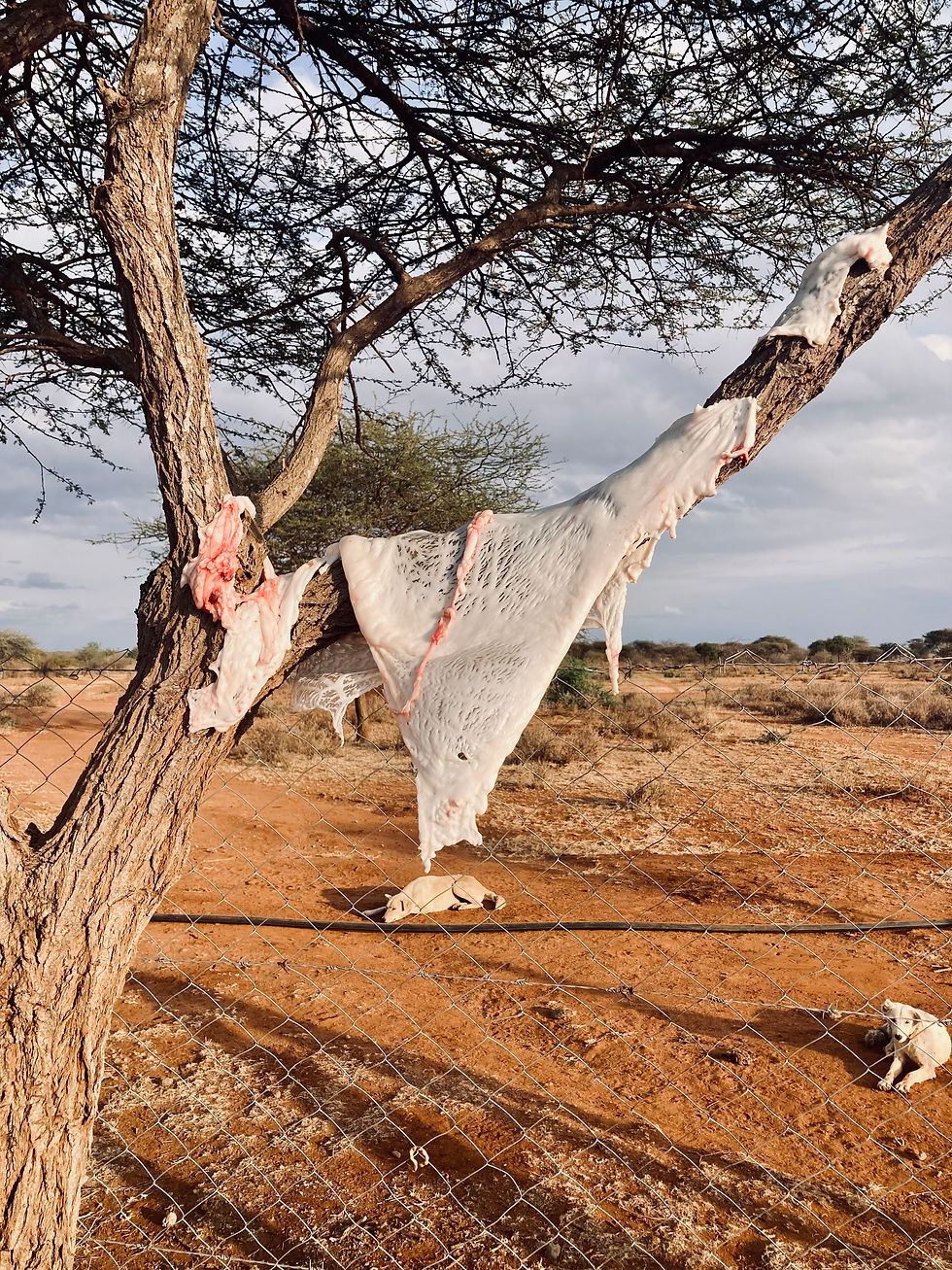
When they came to the kidney, the anatomy lesson turned into a taste test. The kidneys — full, deep reddish, palm-sized organs — are traditionally eaten raw, fresh out of the goat, by Maasai morans. The man cut off a slice for us to try. It was definitely one of the most adventurous foods I’ve ever eaten, and I was honored to be able to try it. It was warm, being so fresh, and slightly salty. Tiny puppies, tan colored with floppy ears, also snuck in to try some of the goat. From the slaughtering, there was a metal bowl about ¾ of the way full with blood. One brave puppy crept in and licked the blood off the side of the bowl with its pink tongue, then crept out in silent, stealthy triumph.

At the second goat roast, we had the opportunity to experience other cultural activities as well. While we were waiting on the meat to cook, the morans demonstrated how the Maasai jump and dance. Dressed in shukas and holding their rungus and staffs upright besides them, they leapt several times high into the air before ending in a final stomp. While one was jumping, the others would dance and sing. Moving their shoulders and neck back and forth in rhythm, they would sing in a guttural hum, mingled with shrill yells. One of the men — who had jokingly offered my parents 10 cows in exchange for one of us in marriage — humorously incorporated Western survival gear into his dance. He hooked a dark green carabiner (given to him by a member of the team) into the long, stretched out hole in his ear, then started to dance, jingling and shaking the carabiner to the rhythm of the music.
Another non-goat related experience was learning about natural toothbrushes. Our friend, Tipaai, showed us how it's done. He cut a branch from an acacia tree and sharpened one end into a toothpick with his knife. On the other end, he shaved off the bark, revealing stiff tan fibers. He then demonstrated to us how to use it; first, by chewing on the toothbrush end, then by scrubbing your teeth with the softened fibers.

Once the meat was prepared, they skewered it across long, sharpened sticks and stuck it into the ground around the fire. Pointed upwards in a circle around the coals, the meat roasted, the juices dripping down and sizzling. We sat in chairs around the fire and sipped tea while we visited. Soon, the liver was brought out to the campfire. It had been skewered whole, then roasted until the edges were crispy. Since it was so fresh, it was probably the best liver I have ever tried; there was almost no trace of the typical flavor that often accompanies that part of the meat. Maasai women usually eat separately from the men, but because we were the guests, or perhaps because we were foreigners, we ate all together. Once all the meat was roasted, we filled our plates and ate in the dark around the fire, staring up at the stars, engaged in conversation and enjoying the beautiful moment.

Glossary:
Moran – a Maasai warrior, one of the male age sets
Rungu — a Maasai club
Shukas – colorful, checkered blankets that the Maasai use as clothing


Comments